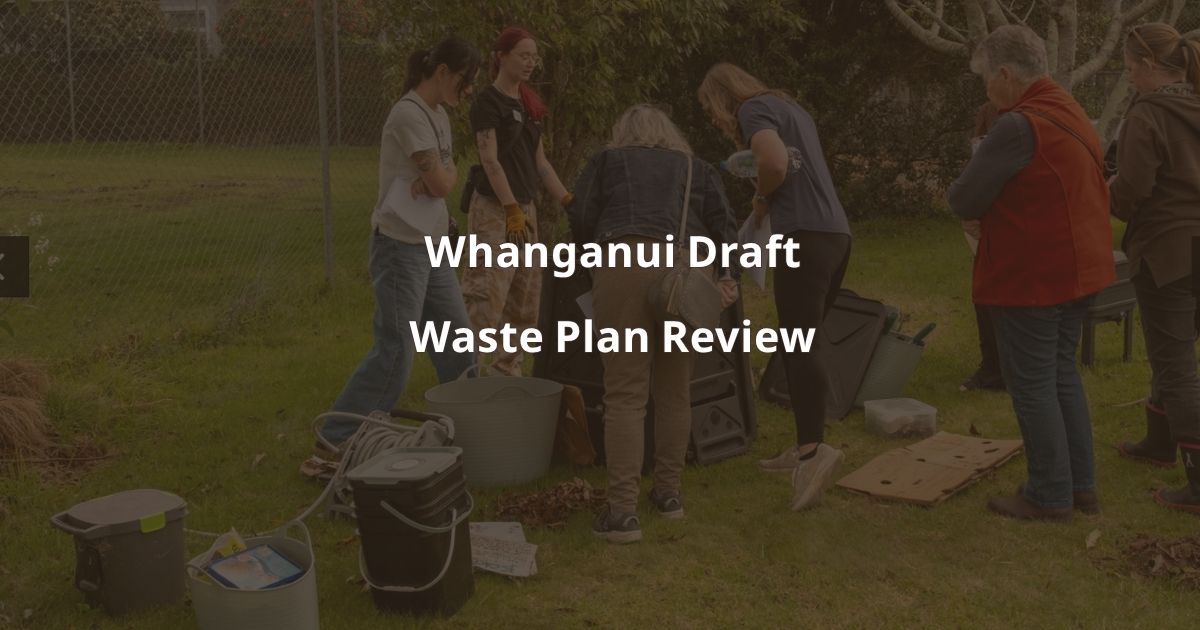
Whanganui District Council has released its draft Waste Management and Minimisation Plan for 2027–2033, and the public survey is open until Thursday 12 November

Whanganui sends 724kg of rubbish per person to landfill every year.
That is 37% higher than the national average. And almost half of what is in our kerbside rubbish bins (48%) is food and garden waste.
How is this happening, I wonder?
Why I think this survey matters
In March 2025, the council cancelled its planned kerbside food scraps collection. The government had dropped its plan to make food scraps collections compulsory, and many residents didn’t want to pay a higher targeted rate for the service.
Me neither, because we have nothing to put out from our house! I do composting for my kitchen scraps, and of course a Kiero bin for the rest.
If the council is not collecting our food scraps, then we, as households, need to deal with them ourselves. That’s what we decided, didn’t we?
But the data shows we’re not doing well enough!
If we can’t, the food waste keeps going to landfill. And sooner or later, Whanganui MAY end up like other cities — with a council-run collection, and higher rates to pay for it.
Why? The landfill will soon be full. Other cities are already seeing results from their food scraps collections. If Whanganui, which chose home composting, shows no improvement, I don’t think the other councils will stay quiet.
Because the landfill is shared — it’s not only Whanganui that uses it.
We need to treat this as our own problem, and take it seriously.
Please have your say
Please fill in the survey, and let the council know you agree that food waste can be dealt with at home.
You don’t have to live in Whanganui to take part. When you sign up, you can choose your connection with Whanganui, and there are options like “Visitor” and “Ratepayer outside the city.”
If Kiero is recognised in Whanganui, people in other cities may also be able to get funding and start activities like mine in the future.
Bring it on Aotearoa, New Zealand!