Whanganui’s Food Waste Problem — And What One Kitchen Proves Is Possible Food doesn’t have to become waste. But right now, in Whanganui, most of it does. 30% of what goes into Whanganui rubbish bins is food scraps. Fewer than 20% of households compost.
And across New Zealand, each person wastes an average of 237 kg of food every year — costing households around $1,364 annually. That’s not just a waste of money.
Zero Food Waste — No Garden Required
Food rotting in landfill produces methane, a greenhouse gas far more potent than CO₂. In New Zealand, organic waste already accounts for 9% of our biogenic methane emissions.
What Whanganui Tried — And Why It Didn’t Scale In 2024, Whanganui District Council trialled a kerbside food scraps collection with 400 households. Results were promising — 72% rated it positively. But in March 2025, the Council cancelled the district-wide rollout.
Many households already pay for private rubbish collection — in my case, $18 a month for a pickup I only need once a month. Adding another fee on top of that is understandably hard to welcome. Especially when the benefit stays invisible: the scraps leave your property, and that’s it. But what if food scraps didn’t need to leave at all?
I’ve been living in Whanganui for several years, and for the past three years, my household has produced almost zero food waste.
No kerbside collection needed. No additional rates. No smell. I’ve tried many systems over the years — worm farms, Bokashi, traditional compost.
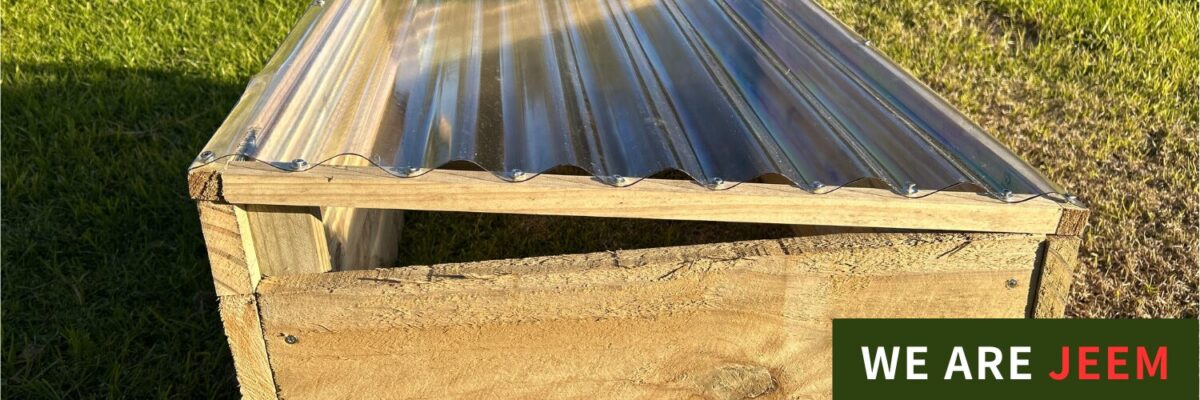
Each has its place. But Kiero caught my attention for a different reason: you watch the scraps simply disappear.
That’s no accident. The name “Kiero” is a playful Japanese wordplay — Kiero meaning “disappear.” Its inventor, Matsumoto Nobuo, gave it that name with a sense of humour.
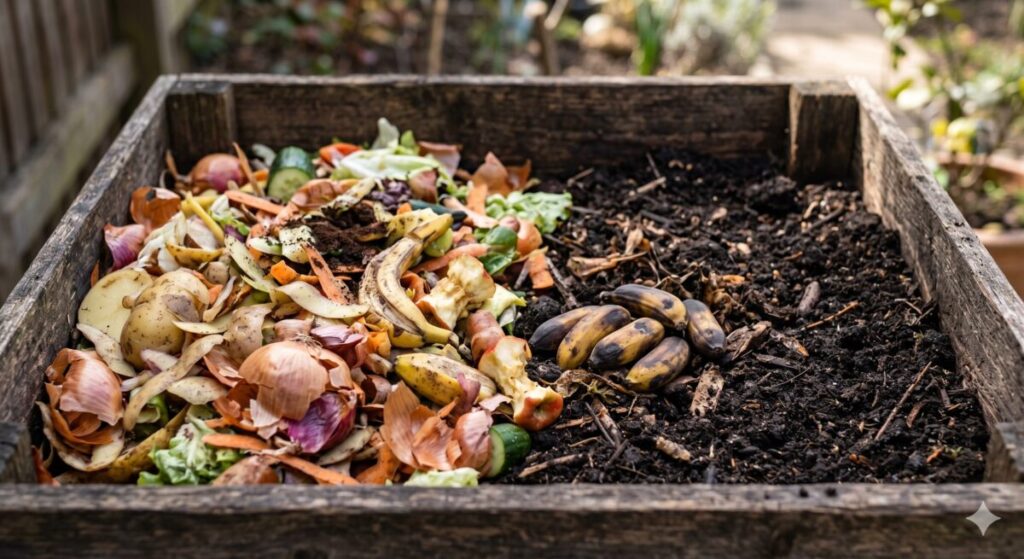
But the joke is also the truth: food scraps go in, and with the help of soil microbes, they are gone. No residue, no odour, no output to manage.
Zero food wasting is possible without a garden.
Not Just for Gardeners For a gardener, other systems offer something back — rich material for the soil. Kiero gives you something different: simplicity. You don’t need a garden to use a Kiero. Unlike composting systems that produce material you need to use somewhere, Kiero asks almost nothing of you.
That’s exactly why it can reach households that other systems can’t. Small Steps, Real Results.
I’m just getting started in Whanganui. My track record so far:
- 3 online workshops (Japanese, and one in English)
- 2 event displays
- 2 garden tours
- 3 years of near-zero household food waste
- Permaculture living and a love of gardening
These numbers are small. But they represent something real: Kiero works in a Whanganui backyard, in a Whanganui climate, for a Whanganui family.
The question isn’t whether it works. The question is how many more households could benefit.
A Community Solution, Not a Rate Rise. Kiero doesn’t require infrastructure. No truck route. No processing facility. No extra emissions from collection vehicles. If even 10% of Whanganui households diverted their food scraps through a system like Kiero, the impact on our landfill and our emissions would be measurable.
That’s what I’m working toward. One workshop, one garden, one kitchen at a time. From Whanganui — and one day, across all of Aotearoa New Zealand.
Sources: Ministry for the Environment (2024), Love Food Hate Waste NZ, Whanganui District Council waste audits, 1News (March 2025)